
Leadership Wisdom of the Week #28
“The great leader is seen as servant first.”
– Robert K. Greenleaf, The Servant as Leader
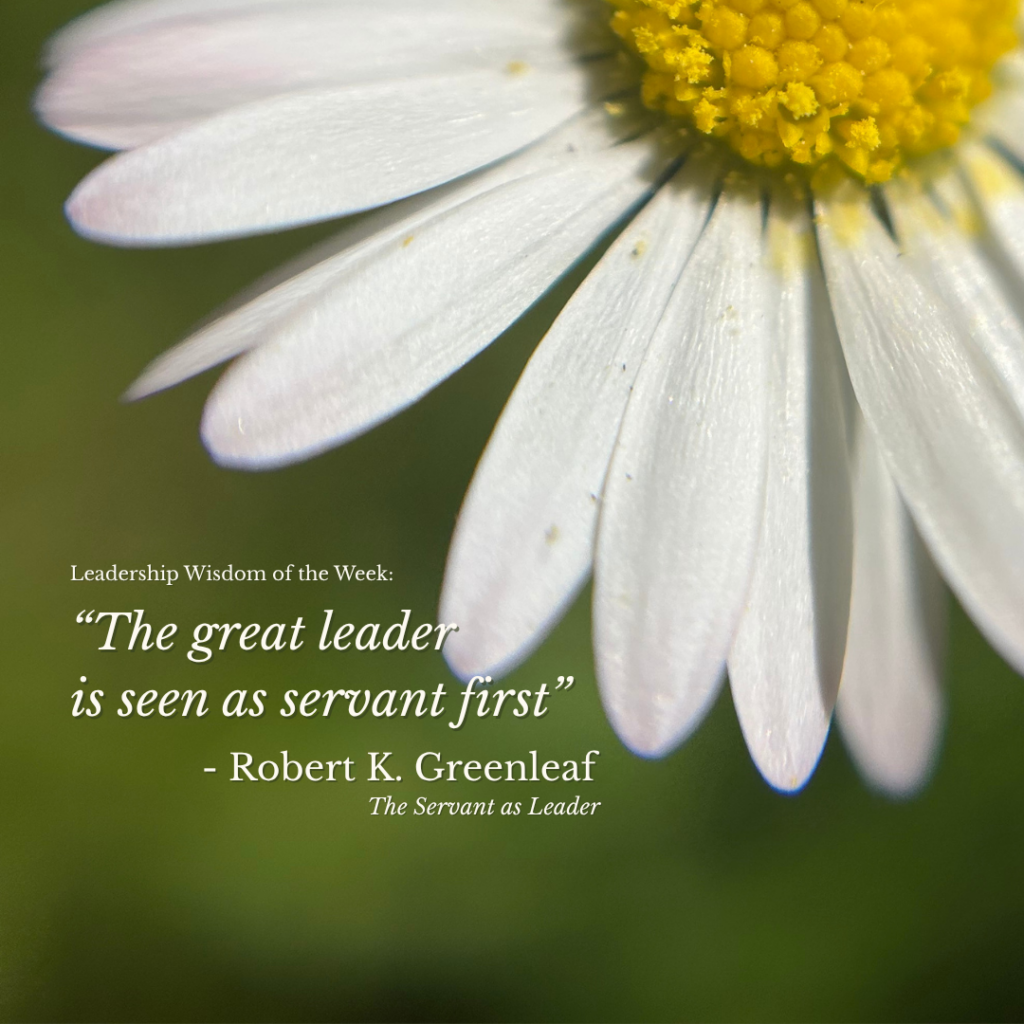
This week’s quote comes from Robert K. Greenleaf’s 1970 essay. In it, he refers to the discussion at the time about power and authority – and the emergence of less coercive and more creative ways of leading and supporting one another in society. Now, in the mid-2020s, I have a feeling that many societies are moving in almost the opposite direction. And yet, there is still a great deal of research showing that a more empowering and coaching-based approach to leadership is more effective in the longer term.
One of the basic principles of servant leadership is that people freely choose to follow the leader. Of course, people do not always get to choose their leaders at work. But as leaders, we can work to earn their genuine willingness to follow. When people want to do their best for their leader, their team and their organisation, they are motivated to do more than just the minimum – or even less than that.
Being a servant first and a leader only after that means that we, as leaders, need to reflect on why we want to lead. Is it primarily for our own benefit, for a better salary or title, or do we genuinely enjoy giving something to others and helping them succeed? And how do we make this motivation visible to our teams?
Being a servant leader does not mean pleasing everyone all the time. Nor does it mean putting every individual wish before the needs of the organisation. On the contrary, it means thinking about the bigger picture, the goals the organisation is working towards and our own role in helping both the organisation and its people succeed.
There is also another side to being a servant first. If you see leadership as a way of supporting other people and teams in achieving greater things, you may also feel a certain responsibility to step forward and serve. In today’s world, where we see highly visible examples of leaders appearing to lead primarily for their own benefit, I feel it is critical that people who want to put their expertise and experience at the service of others actually step up and take on leadership positions.
At the same time, there is a lot of discussion in our society today about how difficult it is to get people – especially younger people – to take on leadership roles. These roles are often seen as highly demanding, with expectations coming from both above and below. We cannot simply call on good people to step forward without also giving them the support they need. Leaders – especially more junior ones – need support from their organisations to find the right balance between the expectations placed on them and the resources available to them.
It is also important to remind ourselves that we do not have to be perfect as leaders. Good intentions do not solve every leadership challenge, but they give us a valuable foundation. If you genuinely aim to do what is best for your team and your organisation – and remain willing to learn along the way – you are already on the right track.
Leadership Wisdom of the Week: Why?
This year, I decided to explore new ideas about leadership—but also to revisit and reflect on some old favourites. And I felt like sharing the most important ones with you.
These insights come from many different sources: leadership researchers and philosophers, but also from some of my favourite songwriters and fiction writers. What matters is that each of them has made me reflect on something essential about leadership.